Profitability of regulated fibre service providers
This report analyses information disclosed by regulated fibre service providers.


Key findings
- Northpower Fibre and Enable Networks Ltd (Enable) earned returns above the benchmarks in 2023 and 2024.
- Northpower Fibre’s higher returns were mainly driven by tax losses and lower depreciation.
- Enable’s returns reflected lower operating costs and lower depreciation.
- Tuatahi First Fibre (Tuatahi) and Chorus Ltd (Chorus) had returns below the benchmarks over this same period.
Background
Chorus, Enable, Northpower Fibre and Tuatahi provide fibre services in Aotearoa and are regulated under the Telecommunications Act 2001. Enable operates in the wider Christchurch area. Northpower Fibre operates in Kaipara and Whangārei. Tuatahi operates in Waikato, Bay of Plenty, Taranaki and Whanganui. Chorus covers the remaining areas where fibre is available.1
As part of information disclosure (ID) regulation, these providers must publicly disclose financial, quality and other information. We also set Chorus’ maximum revenue and minimum quality standards, as the only fibre provider subject to price-quality (PQ) regulation. Enable, Northpower Fibre and Tuatahi are collectively referred to as ‘ID-only’ providers in this report.
Aside from the Fibre Performance Visualisations, this report is the first published summary and analysis under the Fibre ID regime. We are required under section 187(2)(b) of the Telecommunications Act 2001 to publish our summary and analysis of providers’ performance. This report helps stakeholders better understand whether providers are limited in their ability to earn excessive profits.2
|
This report uses ROI and WACC as key profitability measures. |
Return on Investment (ROI) measures how much profit providers earn relative to their investment (expressed as a percentage). We also refer to ROI as returns.
Weighted Average Cost of Capital (WACC) reflects expected financing costs. We use WACC as a benchmark return to compare each provider’s ROI.
|
When ROI is consistently higher than WACC, a business may be earning excess profits.3 |
Where ROI exceeds the WACC in the short term due to an increase in efficiency, we would not consider that the provider earned excessive profits. However, if this persists over time, we would expect providers to share these benefits with end-users, which reflects how a workably competitive market would operate.4
We regularly publish Fibre Performance Visualisations using ID data. One of the charts in the visualisations shown in Figure 1 compares each provider’s ROI to its inflation-adjusted WACC from 2022 to 2024.5
Figure 1: ROI comparable to Post-tax WACC*
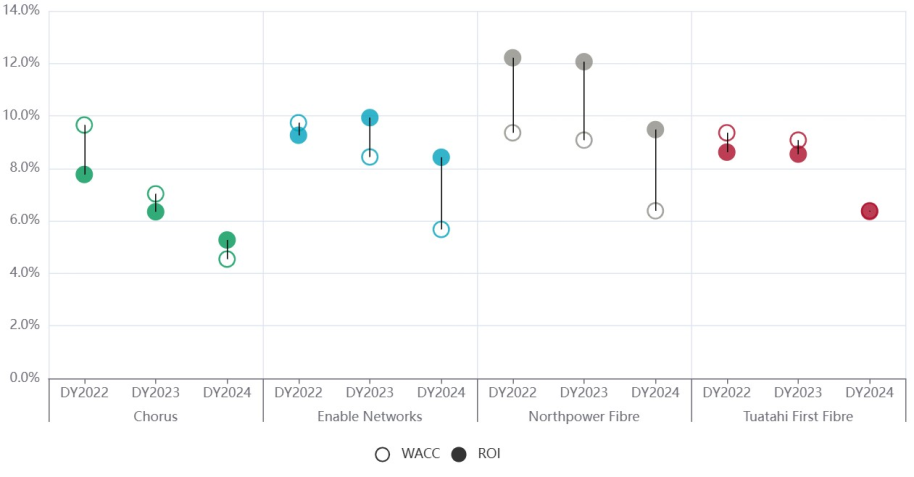
* The different year‑end disclosure dates of providers lead to different inflation‑adjusted WACCs in the same disclosure year.
Figure 1 shows that Northpower Fibre and Enable’s ROI were above their respective WACC in 2023 and 2024. The analysis in this report seeks to understand the drivers of Northpower Fibre’s and Enable’s higher than benchmark returns.
Our approach
We focused on reported ID data for 2023 and 2024. These are the first full years with complete data for all providers after the regulatory regime started on 1 January 2022. We have part-year data for 2022, and 2025 data was incomplete at the time of publishing this report, as providers have different disclosure year-end dates.6
We will continue to monitor the profitability of providers. Given the key factors in this analysis (eg, regulated asset bases (RABs), depreciation, operating practices) are relatively stable over time, we consider it gives a reasonable indication of underlying trends.
We acknowledge returns can be volatile from year to year (due to factors such as the timing of cash flows and inflation), and it is normal for them to fluctuate relative to the benchmark.7
Methodology
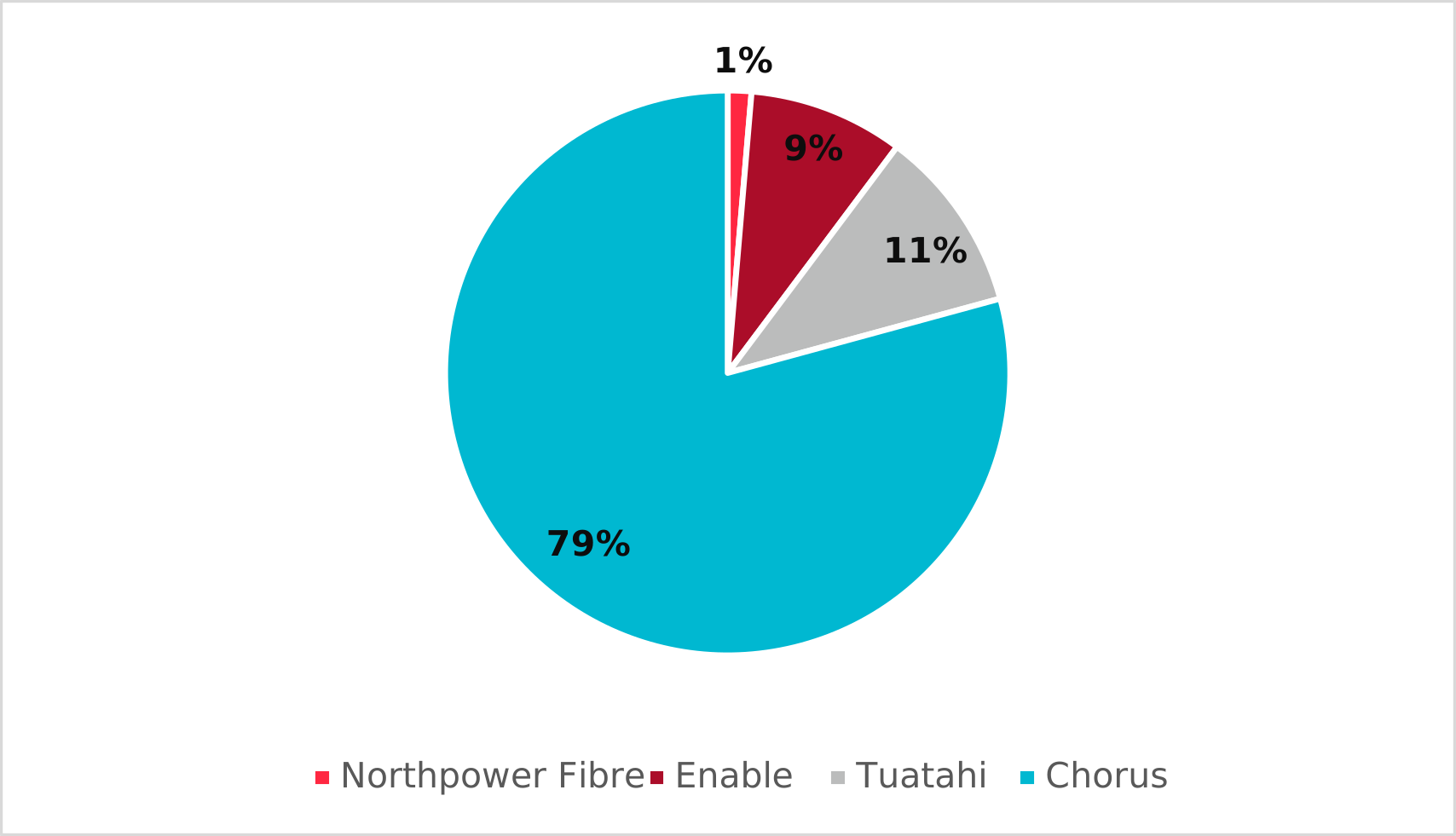
Providers vary in size, as shown in Figure 2. To enable a meaningful comparison in our analysis, we have adjusted for size differences by expressing each cost driver (eg, depreciation, tax, operating expenses) as a proportion of the provider's asset base. We then take an average of each of the providers’ cost drivers in percentage terms, called the sector average in this report, and compare the provider’s individual cost driver to the sector average. We used this method as there is not a complete set of forecast data in ID disclosures. Our comparative analysis provides a different perspective from the explanation that providers give in their ID disclosures on the difference between their actual and forecast values.
Figure 2: Regulated fibre service providers 2024 – Percentage of total assets
We have assessed the key cost drivers and summarised our findings in the waterfall charts in the ‘Profitability assessment’ section of this report.
Profitability assessment
In the waterfall charts in Figures 3 to 6, the columns between ROI (the left most column) and WACC (the right most column) show how certain cost drivers differ from the sector average for Northpower Fibre and Enable in the 2023 and 2024 disclosure years. They do not cover all cost drivers but highlight where the provider stands out.
Northpower fibre
Figure 3: Northpower Fibre – ROI vs WACC 2023
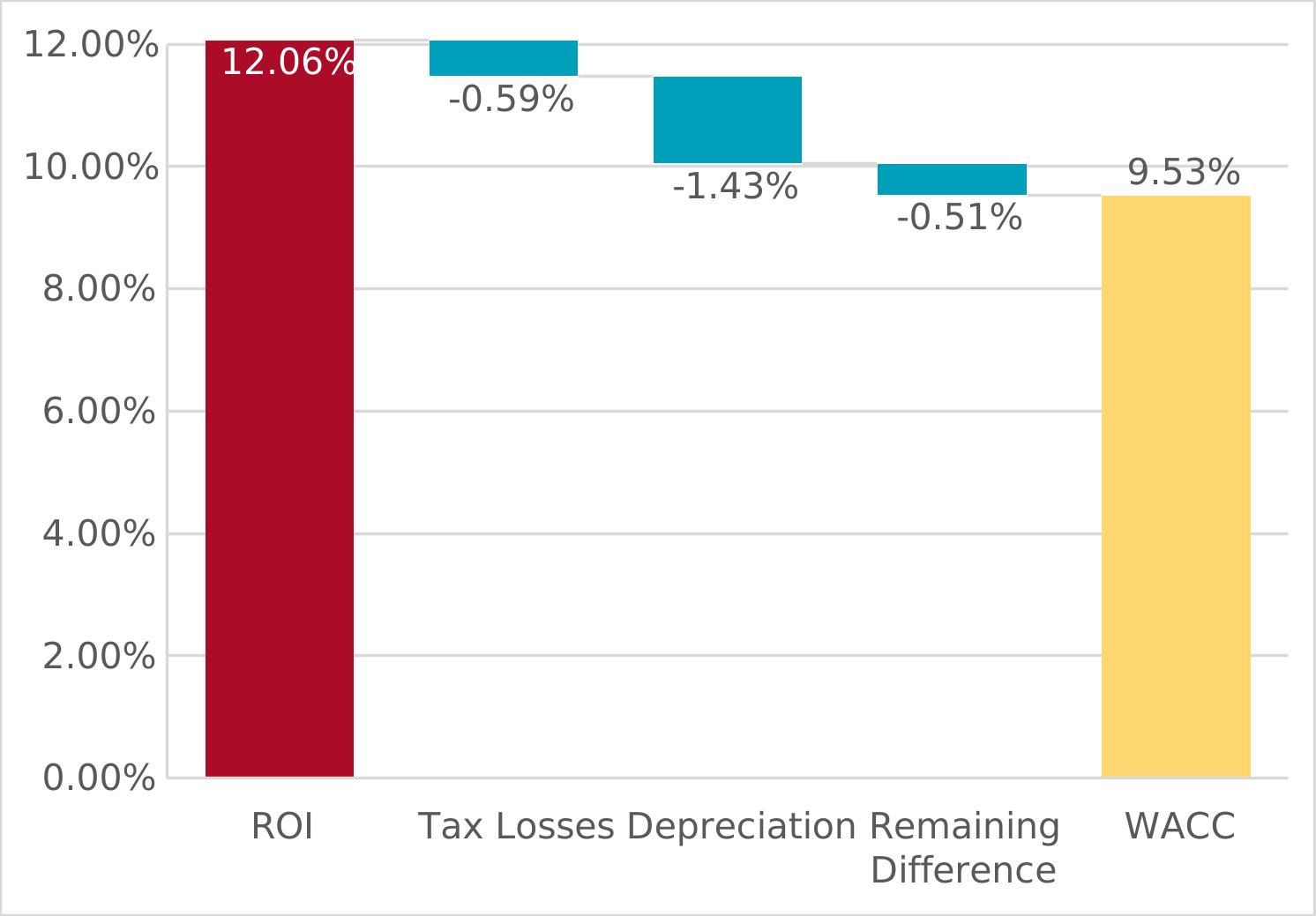
Figure 4: Northpower Fibre – ROI vs WACC 2024
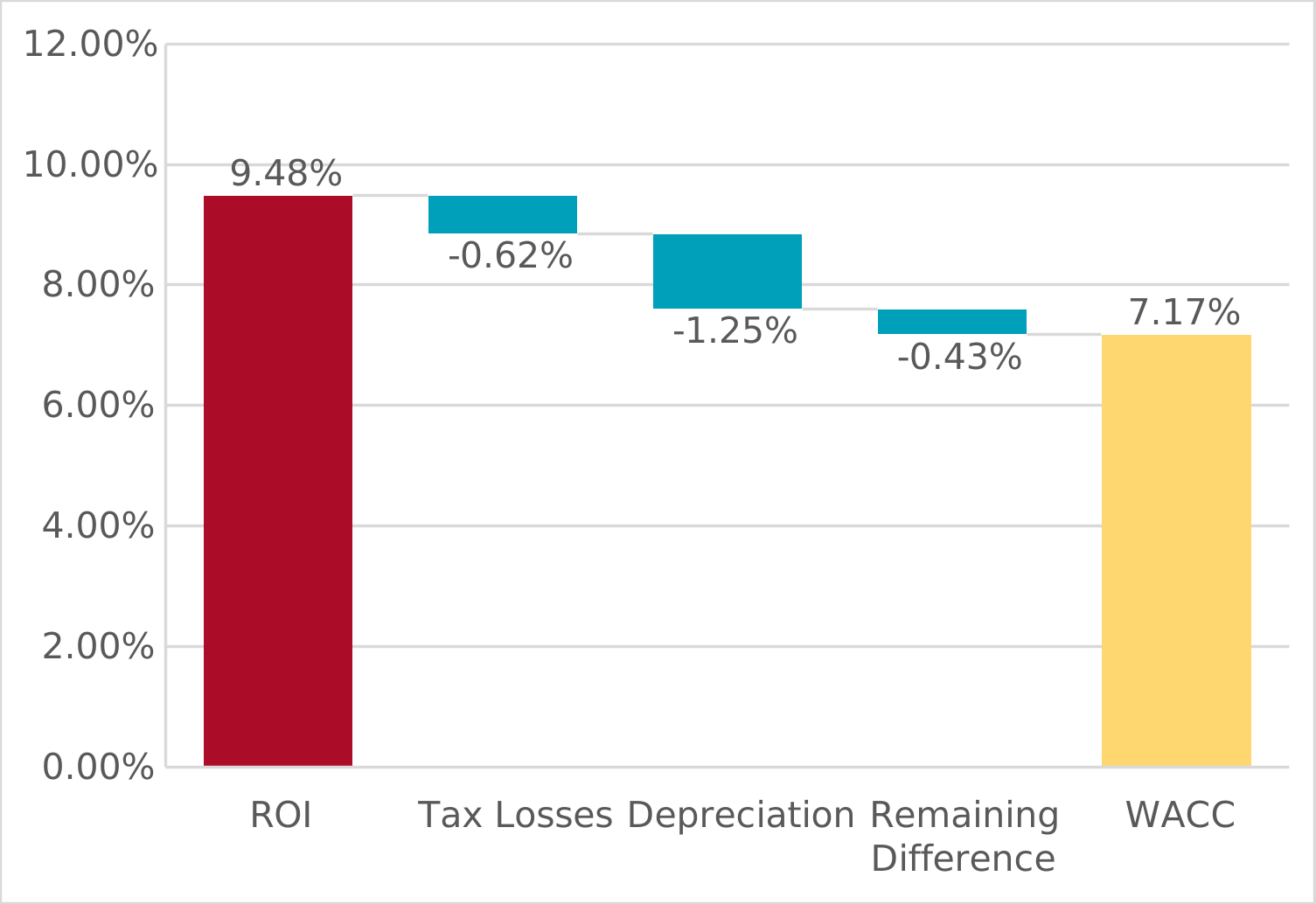
| In 2023 and 2024 Northpower Fibre’s ROI exceeded the WACC by 2.53% and 2.31% respectively. |
Key drivers
Tax losses
- Northpower Fibre has used tax losses in the 2023 and 2024 years, meaning its tax expense is $0.8
- ‘Tax losses’ column in the waterfall chart represents the percentage returns Northpower Fibre would have forgone, had tax losses not been available.
- Northpower Fibre incurred these tax losses before the current regulatory regime began. We assessed the opening balance of these tax losses, which will continue to be carried forward until they are used up.9
Depreciation
- Northpower Fibre had a lower depreciation expense relative to other providers.
- The asset base of a provider is made up of core fibre assets and a financial loss asset (FLA).10
- Depreciation of core fibre assets is broadly consistent across the sector.11
- Northpower Fibre’s FLA is depreciated evenly over a longer period than those of other providers, resulting in a lower annual depreciation cost. In contrast, the other providers apply a depreciation method that results in faster recovery of FLA depreciation costs. This alternative method better promotes incentives to invest, including by reducing the risk that assets become outdated due to technological advancement.12
Enable
Figure 5: Enable – ROI vs WACC 2023
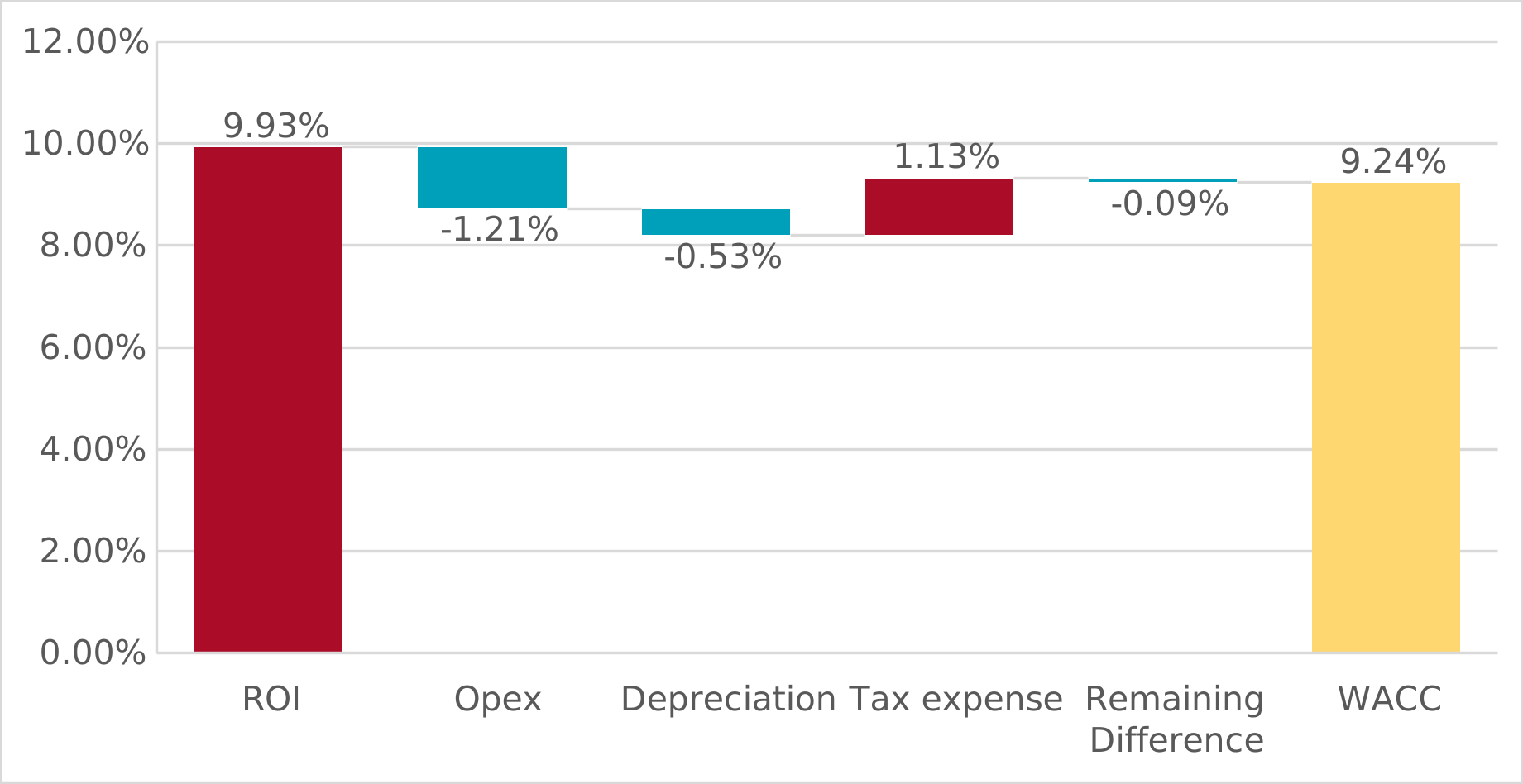
Figure 6: Enable – ROI vs WACC 2024
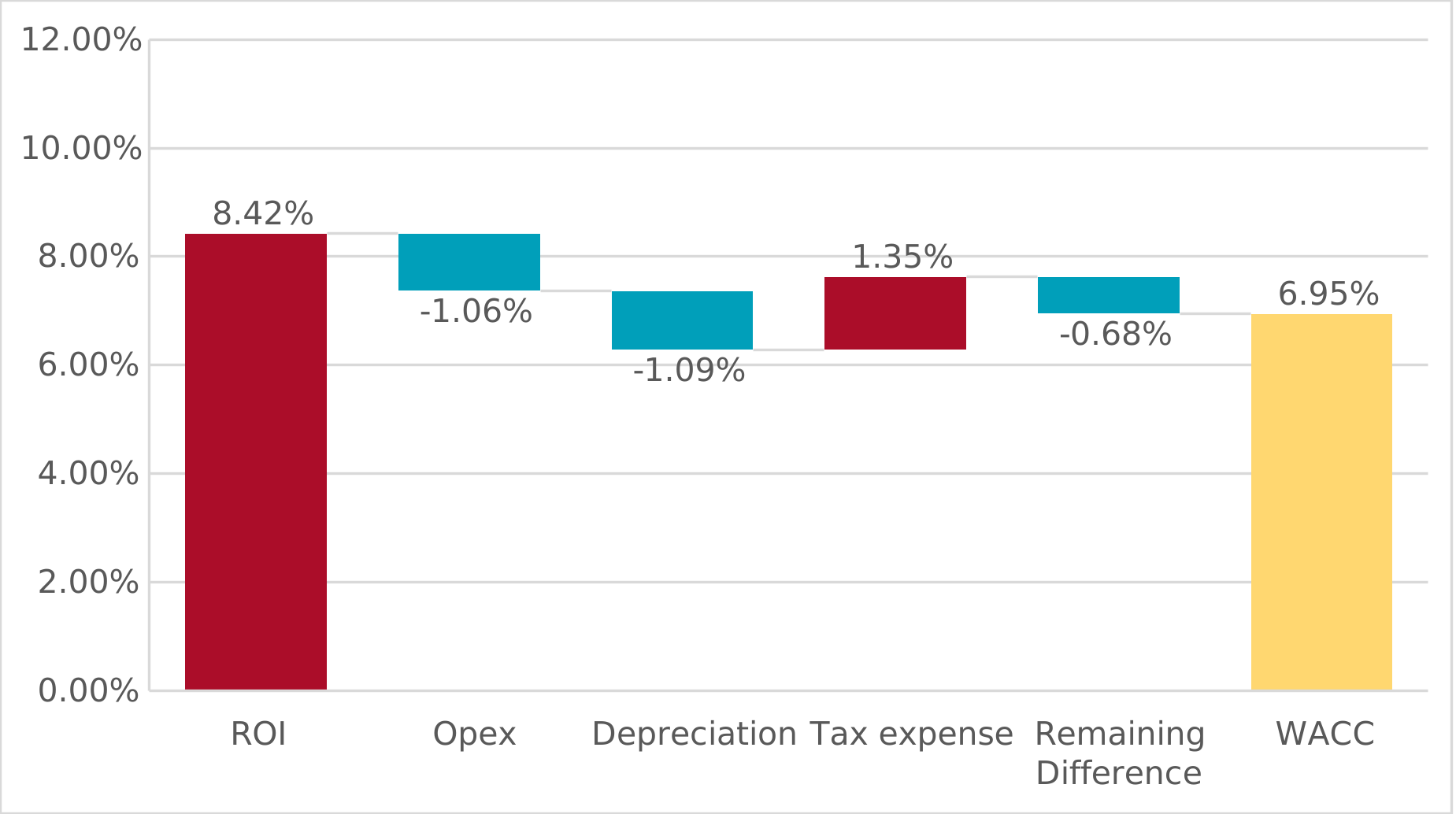
| In 2023 and 2024 Enable’s ROI exceeded the WACC by 0.70% and 1.48% respectively. |
Key drivers
Operating expenditure
- Enable had lower operating expenditure (opex) relative to its asset base compared to the other providers. The 'Opex' column in the waterfall chart shows the impact on return of the difference between Enable's opex and the sector average.
- Enable’s annual reports outline strategic initiatives including a new Operations Support System that helped reduce opex, which could explain its relatively low opex compared to the other providers.13
- If Enable’s ROI exceeds the WACC in the short term due to efficiency gains from its opex strategy, we would not view this as excessive. However, if these gains persist over a longer period, we would expect providers to share these benefits with end-users.
Depreciation
- Enable’s lower depreciation is due to longer asset lives in its Ducts and Manholes assets compared to other providers. 14 Longer asset lives spread the asset cost over more years, reducing annual depreciation expense.
-
The higher depreciation in 2023 compared to 2024 is due to the faster recovery method Enable uses for depreciating its FLA.
Tax expense
- Enable’s tax expense is higher than the other providers because it is taxed on higher profits due to its relatively lower expenses. Unlike Northpower Fibre and Chorus, Enable did not have tax losses that would reduce its tax expense at the start of the regulatory regime.15
Tuatahi
In 2023 and 2024, Tuatahi’s ROI was 0.99% and 0.81% below the WACC respectively, indicating it did not earn excess returns.
We will continue monitoring Tuatahi’s profitability alongside the other providers.
Chorus
In 2023 and 2024, Chorus' ROI was 0.72% and 2.18% below the WACC respectively, indicating it did not earn excess returns.
Unlike the other providers, Chorus is also subject to PQ regulation, which sets its maximum allowable revenue. A wash-up mechanism is applied to carry forward any over- or under-recovery of cost to the next regulatory period.16
Next steps
We will engage with providers to discuss our findings and to develop a deeper understanding of their performance. While this report focuses on ROI cost drivers, we would like to understand how ID-only providers set their pricing as revenues are also an important part of assessing a provider’s return.
Feedback
We welcome feedback to help improve the depth and quality of our insights in future analysis. Please send your feedback to infrastructure.regulation@comcom.govt.nz.
Footnotes
1 See the Map of specified fibre areas on our website which shows the fibre network coverage of all four providers. ⤴
2 Telecommunications Act 2001, section 162 (c) and (d).⤴
3 Commerce Commission: Fibre Information Disclosure Final Decisions – Reasons Paper (30 November 2021), paragraph 4.15.⤴
4 Telecommunications Act 2001, section 162.⤴
5 In the Visualisations we use Chorus’ inflation-adjusted PQ WACC as the benchmark for comparison across companies. This ensures consistency between providers. The analysis in this report uses an inflation-adjusted ID WACC which is set at the start of the annual disclosure period for each provider.⤴
6 Disclosure year end dates are: Chorus 31 December, Enable 30 June, Northpower Fibre and Tuatahi 31 March.⤴
7 Year to year variations in ROI relative to the WACC benchmark are common in other regulated industries. Our Performance Accessibility Tool (PAT) shows this for electricity distribution businesses (EDBs), where ROI differs across providers in any given year. To see these differences, click on the ‘Return on Investment’ tab at the top of the dashboard.⤴
8 Using a tax loss in the context of ID means applying the tax loss from previous years into the calculation of a provider's tax allowance, which in turn is used as part of the ROI calculation. For more detail about tax losses see Local Fibre Companies’ initial information disclosure regulatory asset bases as at 1 January 2022 – Final Decision Reasons Paper (29 June 2023), paragraph 2.11.⤴
9 For ID-only providers see: Local Fibre Companies’ initial information disclosure regulatory asset bases as at 1 January 2022 – Final Decision [2023] NZCC 14. For Chorus see: Determination of Chorus’ Initial PQ RAB, Initial ID-only RAB, Initial ID RAB, and Opening Tax Losses for Disclosure Year 2022 [2022] NZCC 33.⤴
10 Core fibre assets are the physical network and equipment that make fibre broadband possible, while the FLA represents the financial losses the company had while providing fibre services under the Ultrafast Broadband (UFB) programme until the start of the regulatory regime.⤴
11 We note that Northpower Fibre’s asset base differs from other providers because a larger share of its core fibre assets are overhead lines rather than underground lines.⤴
12 We call this risk asset stranding risk. While Northpower Fibre depreciated its FLA uniformly, the other providers adopted the following methods: Under Chorus’ price-quality path (PQP1) starting 1 January 2022, Chorus depreciates its FLA over 14 years using a tilted annuity method with a -13% tilt. Enable has adopted the same approach for its FLA, while Tuatahi has applied a -8% tilt after considering its asset stranding risk.⤴
13 Enable’s annual reports are published on its website: https://www.enable.net.nz/about-enable/corporate-publications open_in_new⤴
14 In 2024, Ducts and Manholes make up 73% of Enable’s asset base with a 50-year life. By comparison: Tuatahi 70% (40 years), Chorus 36% (47 years), and Northpower Fibre 15% (40 years).⤴
15 For ID-only providers see: Local Fibre Companies’ initial information disclosure regulatory asset bases as at 1 January 2022 – Final Decision [2023] NZCC 14, paragraph 4.6, 5,6 and 6.6. For Chorus see: Determination of Chorus’ Initial PQ RAB, Initial ID-only RAB, Initial ID RAB, and Opening Tax Losses for Disclosure Year 2022 [2022] NZCC 33, paragraph 4.9.⤴
16 Further information about the wash-up mechanism can be found here: Commerce Commission: Chorus’ price-quality path from 1 January 2022 – Final decision Reasons paper (16 December 2021), Figure 3.4.⤴